If you’re pricing a new patio, pool deck or driveway, stamped concrete has probably come up. It’s often pitched as a way to get the look of stone or pavers for less money. And on day one, a good stamped job can look very nice.
The real differences show up later: in year three, year ten, and the first time something needs fixing. Here’s a straightforward comparison so you can decide what’s right for your home and budget.
What Stamped Concrete Is
Stamped concrete is a regular poured slab. While the concrete is still wet, the crew colors the surface and presses large rubber mats into it to create a pattern that looks like stone, brick or tile. Once it cures, it’s sealed.
The important thing to understand is that it’s still one solid slab. The “joints” you see are pressed into the surface. They’re decoration, not real breaks between pieces.
What Handcrafted Pavers Are
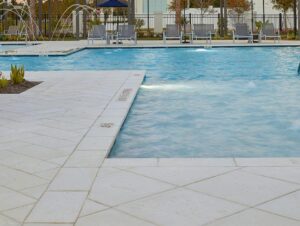
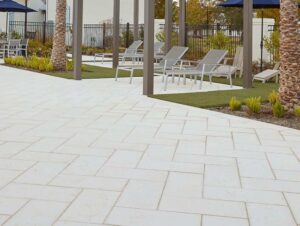
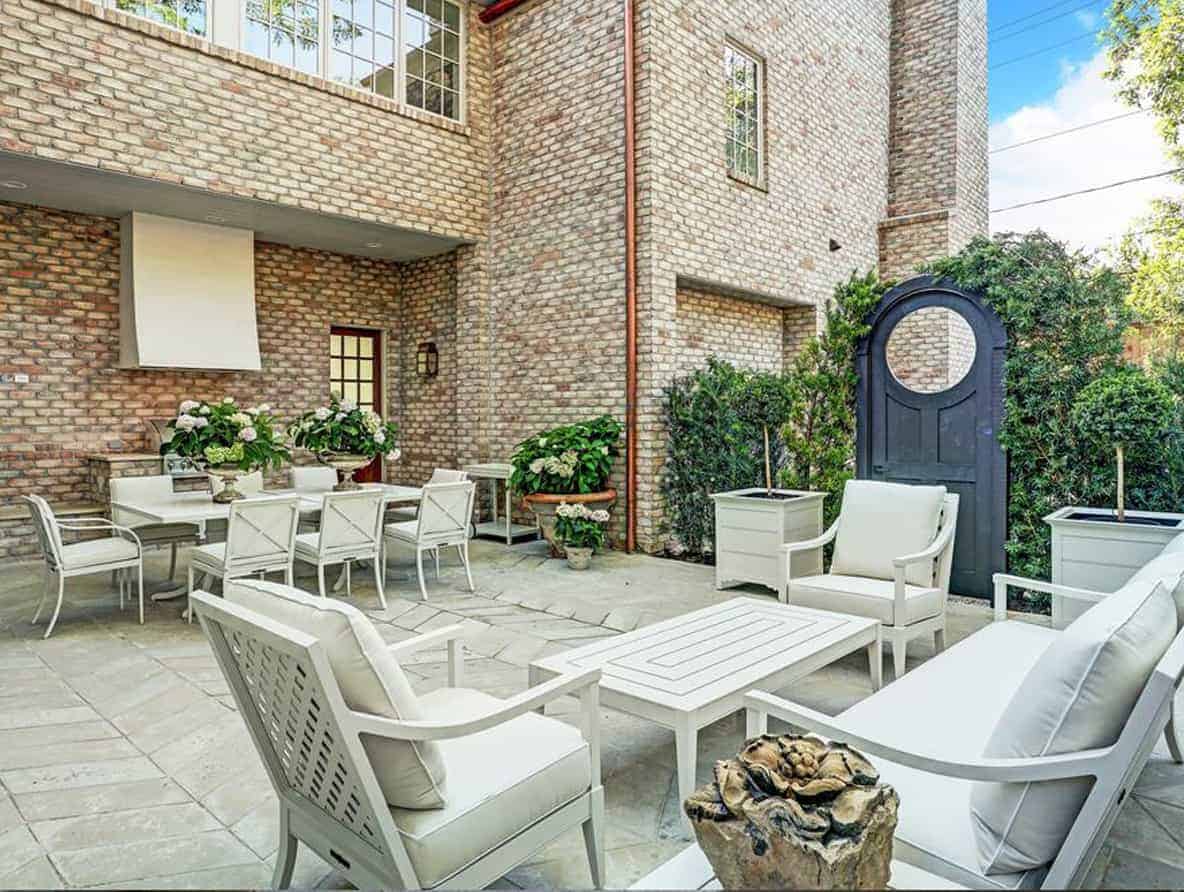
Pavers are individual pieces laid side by side over a prepared base, either set in sand or set in mortar over a concrete slab. Every joint is a real joint.
Our pavers are made by hand in Atmore, Alabama, poured and finished one at a time. That process gives each piece the soft edges and natural variation of stone, which is why they’re often mistaken for limestone or travertine. If you want to know more about how that look is achieved, read Handcrafted Concrete Pavers That Look Like Stone.
Cost: Up Front and Over Time
Stamped concrete usually costs less to install than pavers. That’s its biggest selling point, and it’s a real one. If your budget is fixed and the area is large, it’s worth getting quotes for both.
But the installed price isn’t the whole story. Over the life of the surface, think about:
- Resealing. Stamped concrete relies on its sealer to protect the colored surface and keep it looking fresh. It typically needs resealing every two to three years. Pavers benefit from sealing too, but the color in our pavers runs through the material, not just a surface layer.
- Repairs. This is where the gap widens. More on that below.
- Resale. Real pavers are seen as a premium finish. A cracked stamped slab, on the other hand, can be a mark against a home. We look at this more in How Luxury Pavement Upgrades Improve Home Resale Value.
Cracking: The Biggest Difference
There’s an old saying among concrete contractors: there are two kinds of concrete, the kind that has cracked and the kind that will. Soil settles. Tree roots grow. Ground freezes and thaws. A slab is rigid, so when the ground underneath moves, the slab cracks.
Crews cut control joints into stamped concrete to encourage cracks to form in straight lines, and that helps. But cracks can still wander across the pattern, and on a stamped surface they’re hard to hide because they cut right through the fake stone.
Pavers handle movement differently. Because each piece is separate, small shifts in the ground are absorbed by the joints. The surface can flex a little without breaking.
Repairs: Patch vs. Replace One Piece
When stamped concrete cracks or chips, the fix is usually a patch. Matching the color and texture of a patch to concrete that’s been in the sun for years is very difficult, so repairs tend to stay visible. Major damage can mean tearing out and re-pouring a whole section.
With pavers, you lift the damaged piece, fix the base underneath if needed, and set a new paver in its place. It’s the same reason pavers are popular over buried utilities: if a pipe needs work, the pavers come up and go back down. Tip: keep a few extra pavers from your original order for exactly this reason.
Appearance and Feel
This one comes down to taste, but there are some practical points:
- Pattern repetition. Stamped concrete uses a handful of mats over and over, so on a large area the pattern can start to repeat noticeably. Handcrafted pavers vary naturally from piece to piece.
- Edges and texture. Real pavers have real edges and joints, which give a surface depth and shadow. A stamped surface is ultimately flat.
- Color over time. Stamped concrete color is mostly on the surface. In high-traffic paths, under furniture legs and near pools, it can wear unevenly as the sealer wears down.
- Slip resistance. Sealed stamped concrete can get slick when wet, especially around pools, unless an anti-slip additive is used in the sealer. Pavers come in textured finishes that offer better grip.
Side-by-Side Comparison
| Stamped concrete | Handcrafted pavers | |
|---|---|---|
| Up-front cost | Usually lower | Usually higher |
| Structure | One rigid slab | Individual pieces with real joints |
| Cracking | Likely over time | Joints absorb small movement |
| Repairs | Patches, often visible | Replace the damaged piece |
| Look | Pressed pattern that can repeat | Natural variation piece to piece |
| Color | Mostly on the surface | Through the material |
| Maintenance | Reseal every 2–3 years | Clean and reseal periodically |
When Stamped Concrete Makes Sense
To be fair, stamped concrete isn’t a bad product. It can be a reasonable choice when:
- The budget is tight and the area is large
- The space is a utility area where looks matter less
- You plan to sell soon and want a quick refresh
When Pavers Are Worth It
Pavers tend to be the better choice when:
- You plan to stay in the home for years and want a surface that ages well
- The area is a pool deck, entry or patio where people look closely at the details
- Your soil is prone to settling, or you have trees nearby
- You want the same floor to flow from inside to outside
If you’re also weighing plain poured concrete, our article What Is More Affordable: Poured Concrete or Concrete Pavers? covers that comparison.
Make the Decision in Person
The difference between stamped concrete and handcrafted pavers is easiest to see up close. Order a sample kit and hold a real paver in your hand, then compare it to a stamped surface in your neighborhood. Browse our portfolio for finished projects, or request a quote to see what pavers would cost for your space.