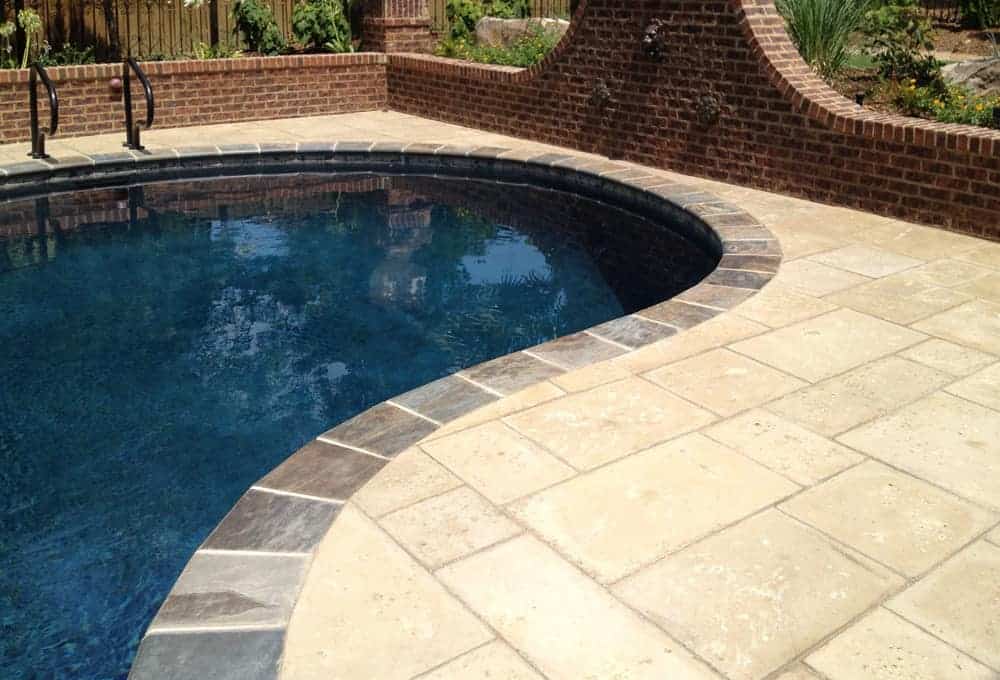
When people think of installing pavers, they often envision the broad surfaces, like driveways, pools, or landscaping hardscape. But one of the unsung heroes in any top-tier hardscape is the concrete paver trim (also called paver edging, coping, trim pieces, or edge restraint). At Peacock Pavers, we believe that your project isn’t complete until it’s framed, capped, and detailed with trim that complements and enhances the design. Let’s explore the ins, outs, and benefits of concrete paver trim.
What Is Concrete Paver Trim?
Concrete paver trim refers to the molded edging or accessory pieces that serve as finishing elements around a paved surface. Typical trim pieces include coping, bullnose, stair treads, wall caps, base molding, door thresholds, and custom transition pieces. These trim components wrap around or border your paver field, creating a clean, cohesive, professional look.
To grasp why trim is essential, think of it like the frame around a painting: the picture might be great, but the frame pulls it all together.
Key Benefits of Using Concrete Paver Trim
Here’s a breakdown of the advantages trim brings to your paver installations, both practically and aesthetically.
1. Structural Integrity and Edge Stability
One of the most crucial roles of paver trim is edge restraint. Without a firm border, pavers at the perimeter can shift, sink, or edge-spread over time, especially in high-traffic zones or areas with freeze-thaw cycling. Proper edging helps “lock in” the pavers, preserving alignment and minimizing movement. In effect, the trim acts as a guardrail, holding the base aggregate, bedding sand, and pavers in place, which increases the long-term durability of the entire installation.
2. Weed and Infill Containment
Another consequence of an untrimmed edge is migration of soil, mulch, lawn, or weeds into the joints of your pavers. Trim forms a barrier that prevents unwelcome growth or material flow into the paver field. This means less maintenance, fewer weeds to pull, and cleaner edges year after year.
3. Erosion Control and Base Retention
When rainwater flows across a surface, it can slowly wash away sand or fine base aggregate, especially near the edges. Over time, this undermines the base support and leads to settling or edge failure. Trim helps retain the base materials, preventing erosion and preserving the integrity of the installation over decades.
4. Clean Lines and Aesthetic Refinement
A major aesthetic benefit is that trim provides crisp, clean lines at the border of your pavers. Rather than ending abruptly against the lawn or garden, you gain a polished, finished look. The transition is intentional. Trim allows curves, angles, and transitions to be well-defined. Additionally, because trim pieces are molded to match the paver colors and styles, they bring cohesion, so the edge doesn’t look like an afterthought.
5. Versatility in Design and Function
Trim gives you flexibility in how you manage transitions, steps, walls, thresholds, and other vertical changes. Rather than improvising with cut pavers or makeshift solutions, you can select trim pieces made specifically for your project, like stairs, wall caps, base molding, and coping. You can also choose different edge profiles (bullnose, beveled, eased, overhangs, pencil edges) to highlight design features or soften hard lines.
6. Safety and Trip-Hazard Prevention
Edges that loosen or sink can become tripping hazards, offering a liability risk, especially in walkways around pools, steps, or high-traffic zones. With proper trim in place, pavers remain locked in alignment, reducing the risk of uneven surfaces that catch feet. Also, because the trim helps maintain the level relationship between pavers and adjacent surfaces, it reduces abrupt transitions that invite stumbles.
7. Easier Maintenance and Repairs
When you need to access underground utilities, repair a damaged paver, or re-sand joints, trim makes that process simpler. A defined edge makes it easier to reconstruct joints or re-level the edge area without disturbing the entire field. Because the boundary is stable, you avoid widespread shifting over time, so fewer repairs are needed.
8. Enhances Property Value and Visual Appeal
Well-designed hardscapes are a strong selling point in home value. A paved area with professional trim looks finished, intentional, and high-quality. That enhances presentation, increases curb appeal, and can often contribute to a stronger return on your hardscape investment. Clients and observers may not consciously notice trim, but they’ll register the difference in polish and craftsmanship.
Best Practices for Choosing and Installing Paver Trim
To ensure that you get the full benefits of concrete paver trim, here are some key tips and considerations:
Match Material and Color
Use the same mix, finishes, and coloring system as your pavers so the trim blends seamlessly. At Peacock Pavers, we offer trim in our standard colors and can do custom color matching for large orders.
Choose Appropriate Profiles
Select the edge profile that fits your design:
- Bullnose or half-bullnose for soft edges at pools or steps
- Beveled edges for modern, sharp transitions
- Pencil or eased edges for decorative appeal
- Overhanging coping, where you want a slight lip
Pick the profile that complements your architecture and function.
Proper Footing and Support
Trim pieces should rest on compacted base material, not on loose sand only. They must be firmly bedded to support lateral loads. The base should extend slightly under the trim to avoid undermining. Trim acts as containment, and its footing is critical.
Over-excavate and Support Beyond the Edge
You’ll often excavate beyond the paver field’s outline so that trim can be keyed and supported in place. If the trim is simply placed flush, lateral stresses can shift it over time. Some installers leave a small buffer zone for added material behind the trim.
Install After Primary Pavers or Simultaneously
There’s a debate over whether to lay trim before or after setting field pavers. Some professionals prefer setting edge restraints first so you know your boundary; others finish field pavers and then place trim to maintain exact alignment. The key is that the trim becomes a permanent anchor to hold pavers, so the sequencing must ensure alignment, structural integrity, and continuity.
Use Proper Jointing and Backfill
Backfill behind the trim and joint the interface carefully (with compacted aggregate or concrete) so that you avoid washout or voids that can shift the trim. Additionally, use quality joint sand or polymeric sand to stabilize the paver‑to‑trim joints.
Periodic Inspection and Maintenance
While trim prolongs durability, it should still be inspected occasionally for signs of settlement, cracking, or displacement. Repair trim sooner rather than later: it’s easier (and cheaper) to fix trim than to re-level the border and then reset multiple pavers.
Why Choose Peacock Pavers Trim
Not all trim is created equal. Here are reasons why our trim offers exceptional value:
- Consistent quality and color-matching with our handcrafted pavers
- A wide variety of accessory pieces: thresholds, stair treads, wall caps, base molding, bullnose, and more
- Custom options for large-scale orders
- Expert guidance on layout, edge selection, and installation methods
Find your Paver Trim Today: Peacock Pavers
Concrete pavers alone can build attractive, durable surfaces, but without proper trim, your project is vulnerable. Edge movement, base washout, weed intrusion, safety hazards, and aesthetic inconsistency are all risks when edges are left unfinished. Meanwhile, a well-trimmed installation locks in stability, frames your design, simplifies upkeep, and presents a turnkey, high-end finish.
If you’re planning a hardscape with Peacock Pavers, don’t leave your edges as an afterthought. Our trim pieces are the key to long-lasting beauty and performance. We invite you to explore our trim options, view our portfolio, or contact us to get started today!


